A custom dog collar has to do three jobs at once: fit the dog comfortably, survive daily wear, and carry the dog’s name and a phone number where a stranger can read it. Those jobs pull on different decisions, and the order you make them in matters. Get the width and material right for the specific dog, then choose a personalization method that matches how the collar will be used, and the finished collar works for years. This is a selection guide built around the dog in front of you rather than a catalog of options.
Measure first, then read the size chart
Every good collar decision starts with a measured neck, not a guess. Wrap a soft tape around the base of the dog’s neck where the collar naturally sits, then add roughly two inches of slack so two fingers slide comfortably underneath. Sizing by breed or weight alone is where most fitting errors begin, because neck circumference varies widely within a size class and the published ranges overlap. The chart below shows typical neck ranges by size category alongside a rough weight band, and the overlap is the point: a heavy-coated medium dog and a lean large dog can land on the same measurement.
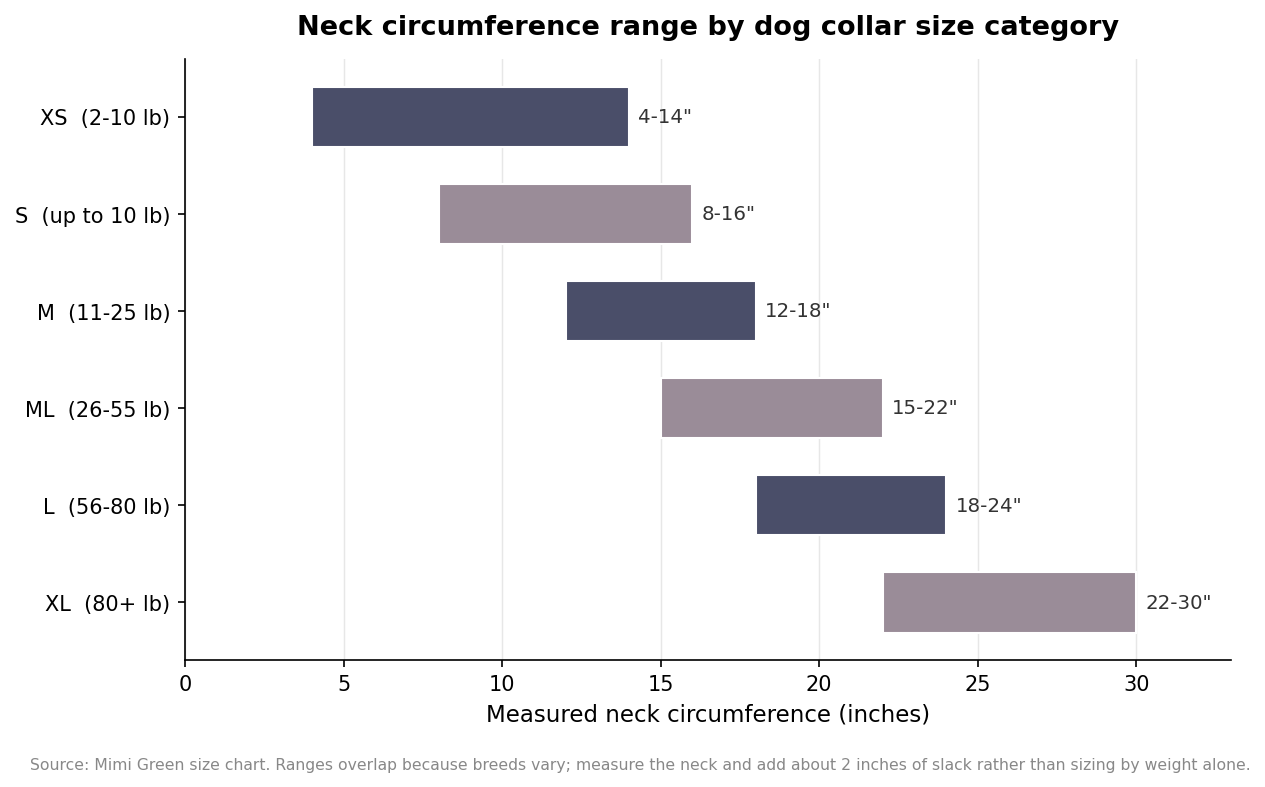
When a measurement falls between two sizes, size up. A collar that runs slightly long can be taken in on the buckle holes, while one that runs short cannot be extended, and a collar that is genuinely too small is both uncomfortable and a safety problem. For a growing puppy, plan to replace the collar rather than buying large and cinching it down, since a bunched, oversized collar chafes and slips.
Match the webbing width to the dog
Width is a comfort and control decision, not just an aesthetic one. Narrow webbing around five-eighths of an inch keeps a small dog’s collar light and unobtrusive and suits necks in roughly the 10 to 12 inch range. A three-quarter inch width is the versatile middle ground for many medium dogs, and a full one-inch width is the workhorse for larger, stronger dogs with necks in the high teens and twenties. The chart below maps these standard widths to the neck sizes they comfortably serve.
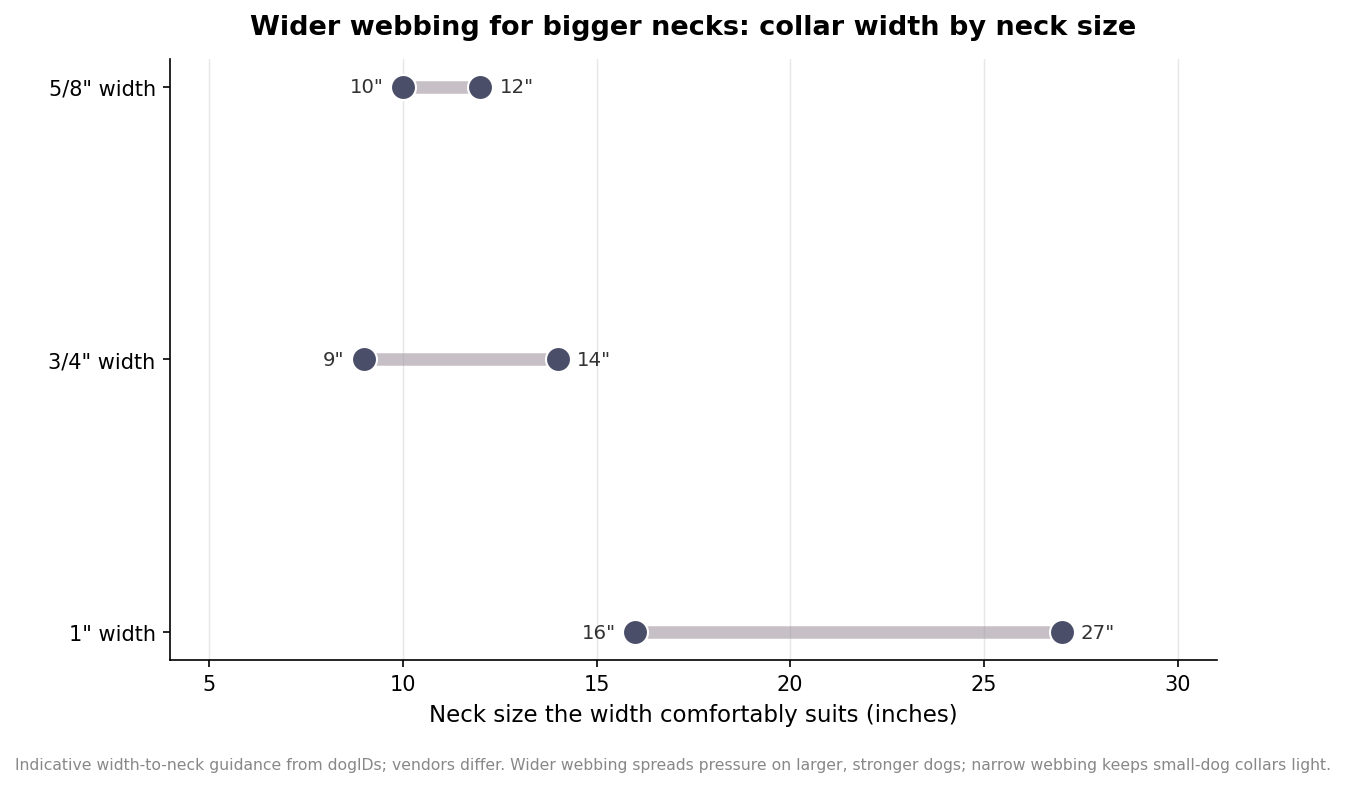
The reason wider webbing matters on a big dog is pressure. A strong dog that pulls concentrates force on a narrow band, and a wider strap spreads that load across more of the neck, which is gentler and less likely to dig in. The reverse is also true: a one-inch strap on a toy breed is heavy, stiff, and overwhelming. Width should track the dog’s size and strength, and only after that its looks.
Let the material decide the maintenance
The webbing material governs how the collar handles water, mud, odor, and time. Nylon is the default for good reason: it is lightweight, soft against sensitive necks, takes bright dyed colors and woven patterns well, and keeps cost down for volume orders. Its weakness is that it absorbs water and can hold odor if a dog swims or rolls often, and it benefits from periodic washing. Biothane, a tough nylon core coated in a non-porous material, answers exactly that problem: it is effectively waterproof and odor-proof, wipes clean with a damp cloth, and suits dogs that spend time in water or on the trail, at a higher price than plain nylon. Leather sits at the traditional end, extremely durable and softening beautifully over time, but it needs a break-in period and is happiest in dry conditions, since repeated soaking degrades it. Choosing among the three is really a question of the dog’s lifestyle: a swimmer points to biothane, a couch companion to nylon, and an owner who wants a collar that ages into character to leather.
Choose how the name and number go on
Personalization is where a custom collar earns its keep, and the methods differ sharply in durability and readability. Embroidery stitches the phone number directly into the nylon webbing, so it is readable from a short distance and cannot fall off, though it relies on good thread-to-webbing contrast and stays sharpest with occasional cleaning. A laser-engraved buckle uses an industrial fiber laser to cut the information deep into the metal, producing a mark that does not wear away and keeps the collar silent because there is no dangling tag. A rivet-on nameplate is the dependable classic, a metal plate fixed flat to the webbing that stays silent and legible for the life of the collar. A back-of-neck nameplate, sometimes called a scruff plate, moves the text to the top of the neck where it is easy to read without reaching under a nervous dog’s chin and offers the most room for multiple lines.
The right method follows the priority. If silence matters, because a jingling tag drives an owner or a household to distraction, engraved buckles and riveted plates win over anything that hangs. If maximum readable text is the goal, a larger nameplate beats embroidery. If low cost across a big order is the driver, embroidered nylon is efficient and holds up well. What all the integrated methods share is that, unlike a hanging tag, they cannot be lost, which is the core safety argument for personalizing the collar itself.
Putting the collar together
Work the decisions in order and they reinforce each other. Measure the neck and add slack, pick the size and then the width that fits the dog’s build and strength, choose the webbing material that matches how wet and dirty the dog’s life is, and finish with a personalization method chosen for whether silence, readable text, or unit cost matters most. Every number here is a starting point to confirm against a specific product, since widths, size ranges, and material options vary by maker. Specified this way, the collar fits the dog rather than the average, and the name and number stay put where they are needed.